
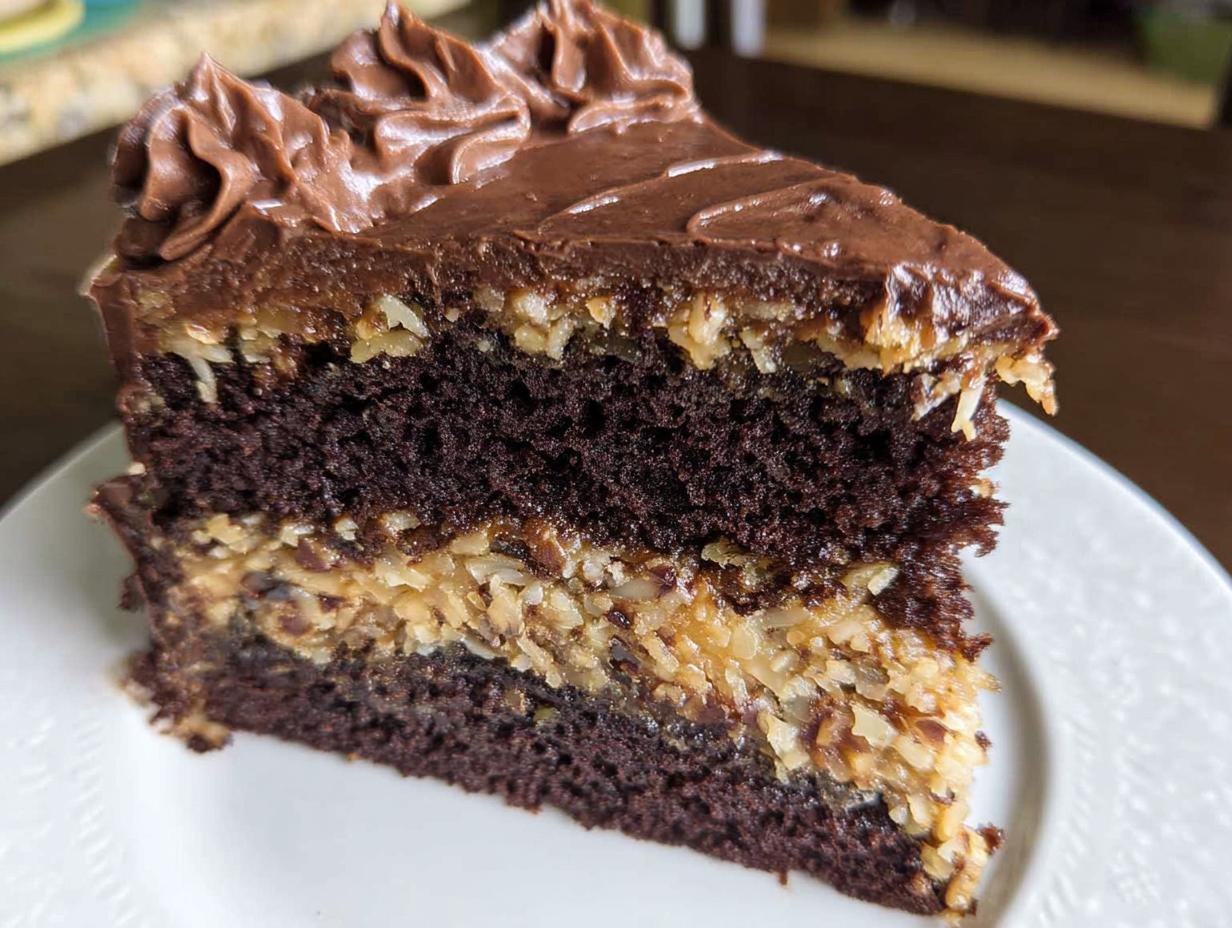
There’s just something about those vintage cake recipes, isn’t there? I’m talking about the kind of dessert that instantly transports you back to a happier, slower time. For me, that’s always been the magnificent German Chocolate Cake Coconut Pecan. It’s the star of every family gathering, and I swear, the aroma alone makes people stop what they’re doing!
Growing up, this specific cake was the centerpiece of every wonderful moment mom ever cooked up. I remember watching Nonna stand over the stove, stirring that beautiful, glossy coconut-pecan frosting until it just gleamed under the kitchen light. She always said the secret to a great German Chocolate Cake Coconut Pecan wasn’t measured in cups, but in the heart you put into making it for someone else. It’s the ultimate comfort dessert, and I promise you, this recipe is totally achievable for us home bakers!
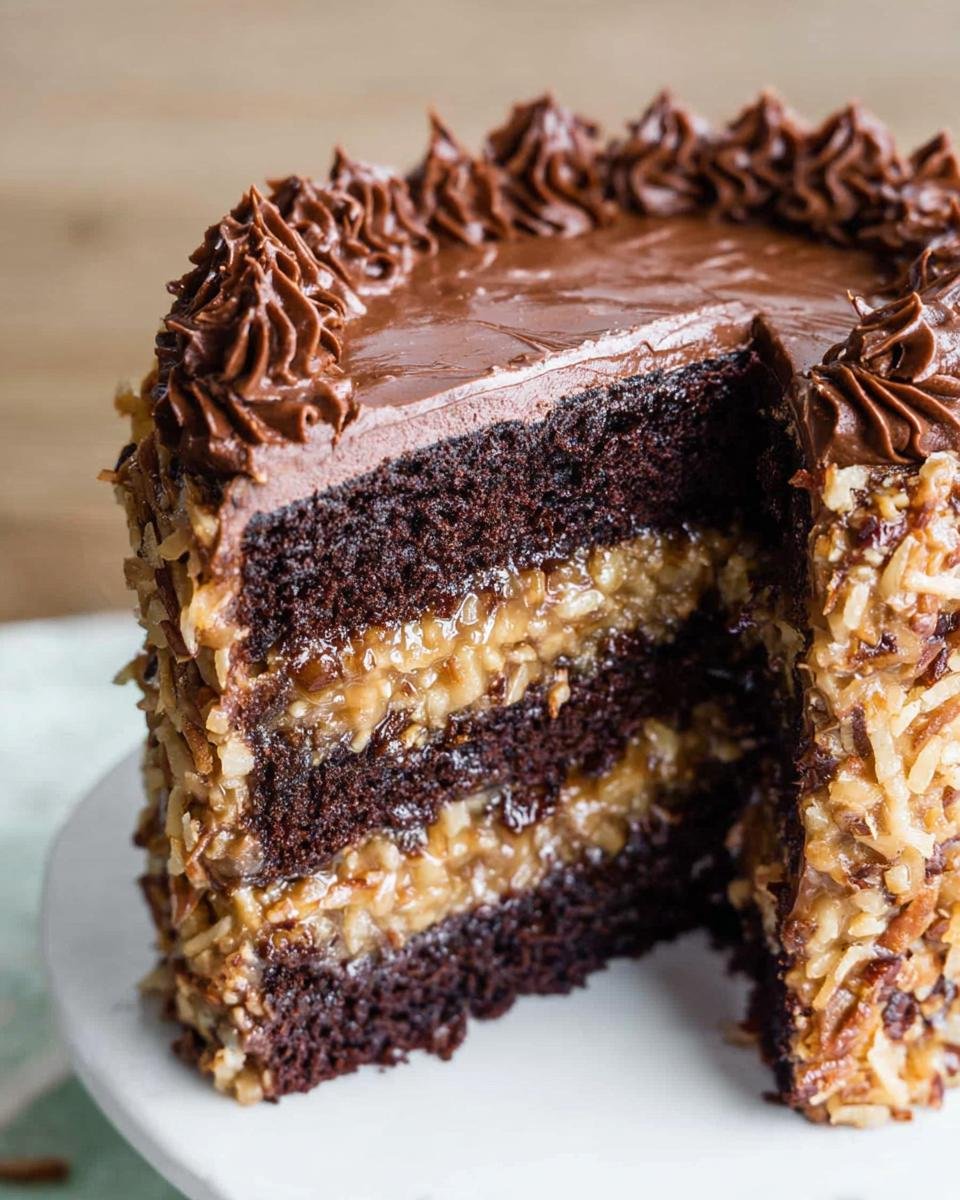
Why You’ll Love This Classic German Chocolate Cake Coconut Pecan Recipe
Honestly, this isn’t just another chocolate cake; it’s an experience! We’re keeping things simple but delivering massive flavor. Here’s why this version will quickly become your go-to. If you’re looking for other fantastic kitchen classics, you should definitely check out my guide on how to make perfect homemade meatballs, but right now, let’s focus on this cake!
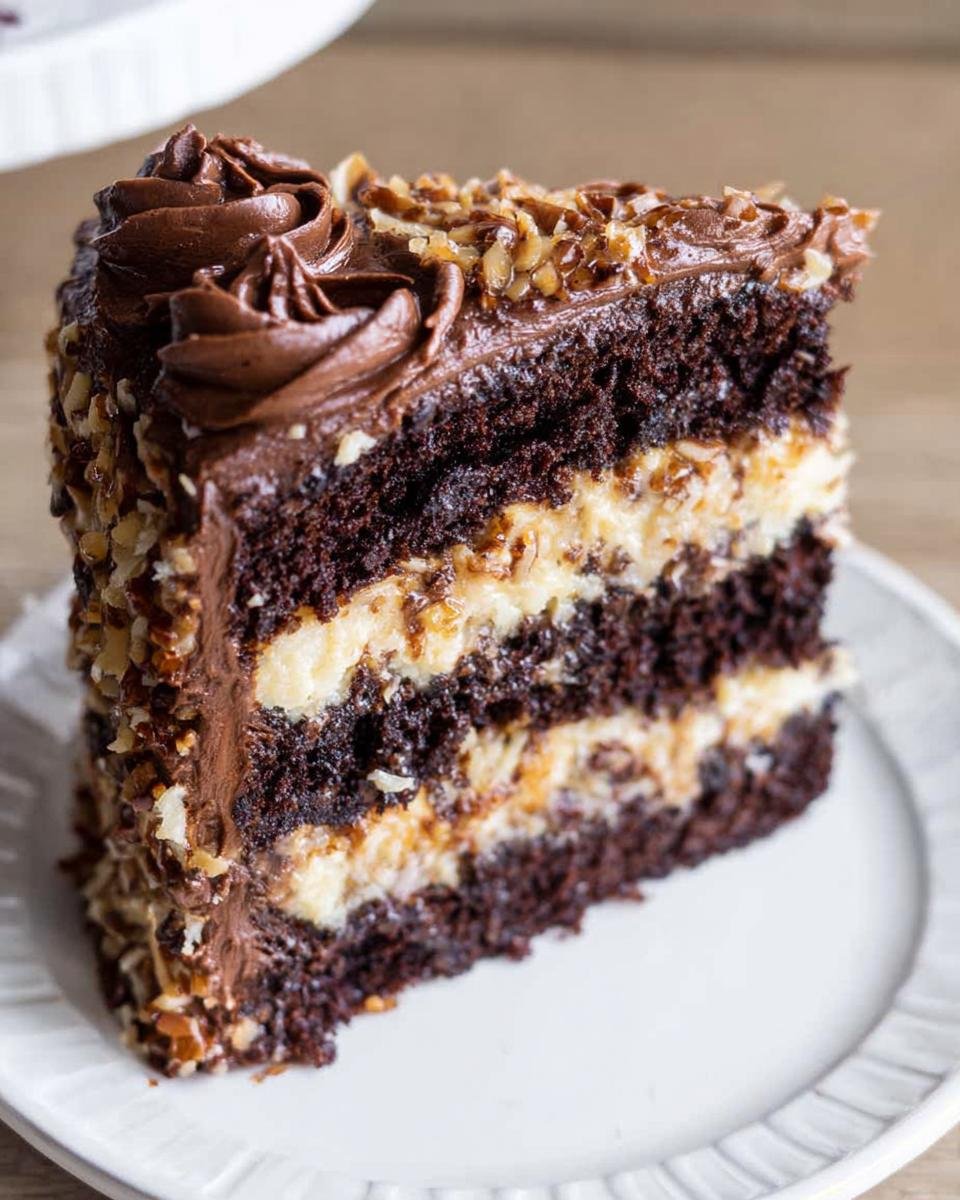
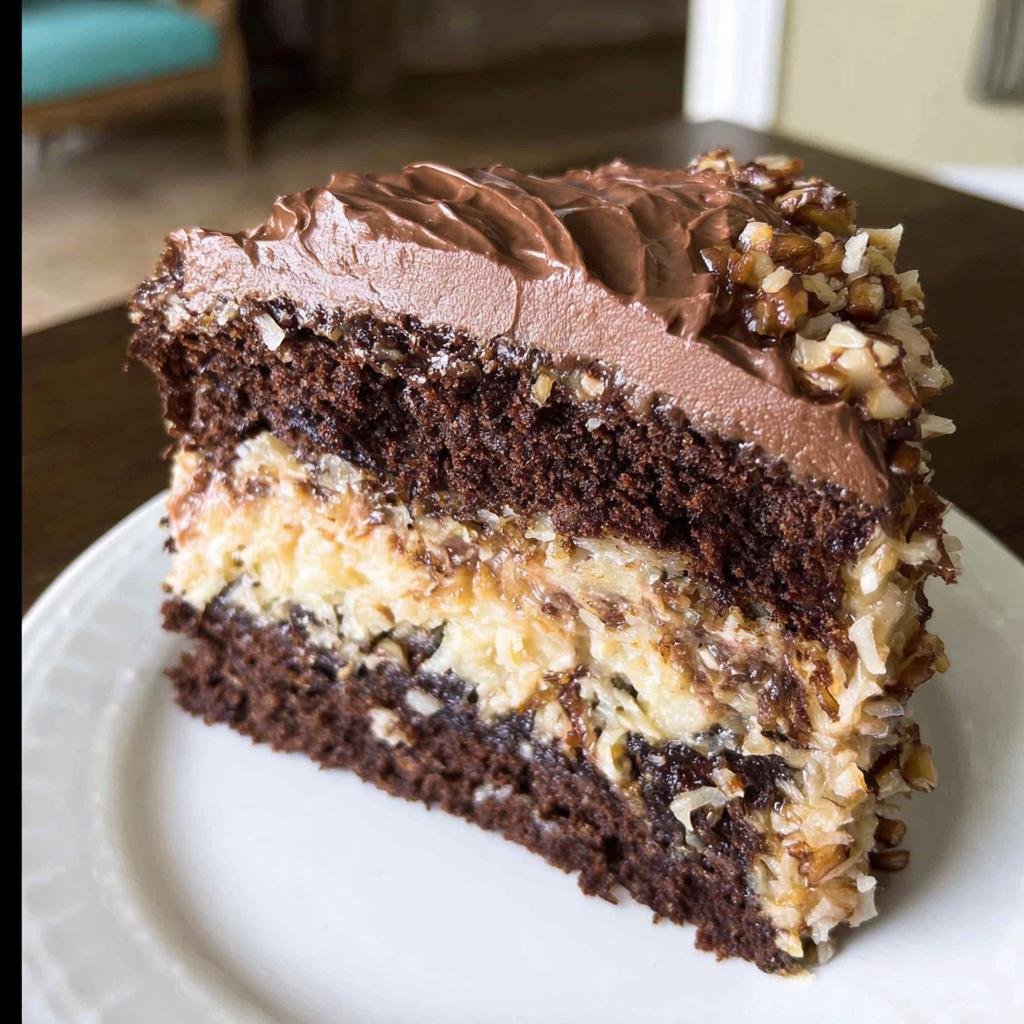
- The Texture Contrast: You get incredibly moist, tender chocolate cake layers perfectly balanced by that famous gooey, crunchy German Chocolate Cake Coconut Pecan topping.
- Two Frostings, All the Fun: We use a basic chocolate buttercream to hold everything together, reserving the star—the coconut pecan topping—for maximum impact.
- Totally Approachable: This is a classic layer cake party centerpiece that doesn’t require fancy pastry skills. You’ve got this!
Essential Equipment for Your German Chocolate Cake Coconut Pecan
Okay, before we dive into the magic part, let’s make sure your kitchen is ready to roll. You don’t need a commercial setup, but having the right tools makes all the difference, especially when dealing with two different frostings!
Gather these basics first. Trust me, having everything out on the counter beforehand stops that frantic searching when the coconut pecan frosting starts thickening up. Time management is everything with this cake!
- Two 8 or 9-inch round baking pans. Make sure they match so your layers bake evenly!
- A large bowl for mixing the dry cake ingredients.
- A separate bowl for mixing the wet cake ingredients.
- A medium saucepan—this is crucial for cooking down that amazing coconut pecan topping until it gets perfectly gooey.
- Wire racks for cooling. You need space for your layers to breathe once they come out of the oven.
Ingredients for the German Chocolate Cake Coconut Pecan Layers
Alright, now for the stuff that matters most! Shopping for a German Chocolate Cake can look a little overwhelming because there are three separate elements, but don’t panic. It’s three easy ingredient groups combined. I always write these out on my list in three different colors so Nonna doesn’t mix up the dry chocolate stuff with the creamy pecan stuff!
We need ingredients for the deep, dark chocolate layers, the famous gooey topping, and the necessary buttercream that keeps everything stable. If you’re interested in other fantastic nut-based desserts, you absolutely must look at my pecan pie bars recipe soon, but here is exactly what you need for this classic layer cake party centerpiece!
For the Chocolate Cake
- 2 cups granulated sugar (400 g)
- 1 3/4 cups all-purpose flour (210 g)
- 3/4 cup unsweetened cocoa powder (75 g)
- 1 1/2 teaspoons baking powder (6 g)
- 1 1/2 teaspoons baking soda (7.5 g)
- 1 teaspoon salt (5 g)
- 2 large eggs
- 1 cup buttermilk (240 ml)
- 1/2 cup oil (vegetable or canola oil, 120 ml)
- 2 teaspoons vanilla extract (10 ml)
- 1 cup boiling water (240 ml)
For the Coconut Pecan Frosting
- 1/2 cup light brown sugar (100 g)
- 1/2 cup granulated sugar (100 g)
- 1/2 cup butter (115 g)
- 3 large egg yolks
- 3/4 cup evaporated milk (180 ml)
- 1 Tablespoon vanilla extract (15 ml)
- 1 cup chopped pecans (120 g)
- 1 cup shredded sweetened coconut (80 g)
For the Chocolate Buttercream Frosting
- 1/2 cup butter (115 g)
- 2/3 cup unsweetened cocoa powder (65 g)
- 3 cups powdered sugar (360 g)
- 1/3 cup evaporated milk (80 ml)
- 1 teaspoon vanilla extract (5 ml)
Step-by-Step Instructions to Make German Chocolate Cake Coconut Pecan
Okay, don’t let the three components scare you off! Once you break it down, this is totally manageable, even for a big party spread. Baking this cake requires timing, especially with that dreamy coconut pecan topping, so get everything measured before you flip the oven switch. If you need a fun drink to sip while you wait for things to set up, you have to sneak a peek at my cranberry bourbon smash recipe!
Preparing and Baking the Cake Layers
First things first: crank that oven up to 375°F! Now, grease those two 8 or 9-inch pans really well. This is important because chocolate cakes sometimes stick—so cut out matching rounds of parchment or wax paper for the bottoms. It’s like a safety net for your beautiful layers.
In one bowl, stir your dry cake ingredients—sugar, flour, cocoa, leaveners, salt. In the second bowl, whisk the eggs, buttermilk, oil, and vanilla. Pour the wet into the dry and mix until just combined. Then, the fun trick: stir in that cup of boiling water last. Yes, it will look super thin, almost like soup—that’s exactly right for that tender crumb!
Pour that liquid batter evenly into your prepared pans and bake them for about 25 to 35 minutes. You want a toothpick to come out clean. Once they are done, let them cool in the pans for five minutes, then gently flip them onto wire racks until they are totally, completely cool. Don’t rush this part!
Cooking the Coconut Pecan Frosting
This is where the magic happens, but you have to pay attention! Grab your medium saucepan. We are cooking this magic down so it sets up nicely later. Combine your brown sugar, white sugar, butter, egg yolks, and evaporated milk. Bring this mixture to a low boil over medium heat, but now you must stir constantly.
Keep stirring until you see the mixture thicken up a little. Once it feels thicker after a few minutes, pull it right off the heat. Stir in your vanilla, those chopped pecans, and the shredded coconut. Please, please, please let this cool completely before you try to spread it on the cake. If you use it warm, the whole thing will slide right off!
Making the Chocolate Buttercream
This part is easier because we aren’t cooking it! Melt your butter first, then mix in that cocoa powder until it’s smooth. Now, you need to alternate adding the powdered sugar and the evaporated milk—little bits at a time—beating well after each addition. Think of it like building a sturdy base for the fancy top layer.
If it looks too stiff—and it often does—add milk a teaspoon at a time until it’s spreadable. If it’s too loose, add a tiny bit more powdered sugar until you get a nice, thick frosting. Stir in that vanilla last. This is what we use to crumb coat and cover the outside of this classic layer cake party showstopper.
Assembling Your German Chocolate Cake Coconut Pecan
We’re ready for the grand finale! Place your first cooled cake layer on your serving stand. Now, grab that chocolate buttercream and spread a thin layer on the top. This acts like glue for the topping. Next, spoon about half of your cooled coconut pecan frosting right over that chocolate layer. Try to keep it about a half-inch away from the edge; we don’t want a sticky overflow!
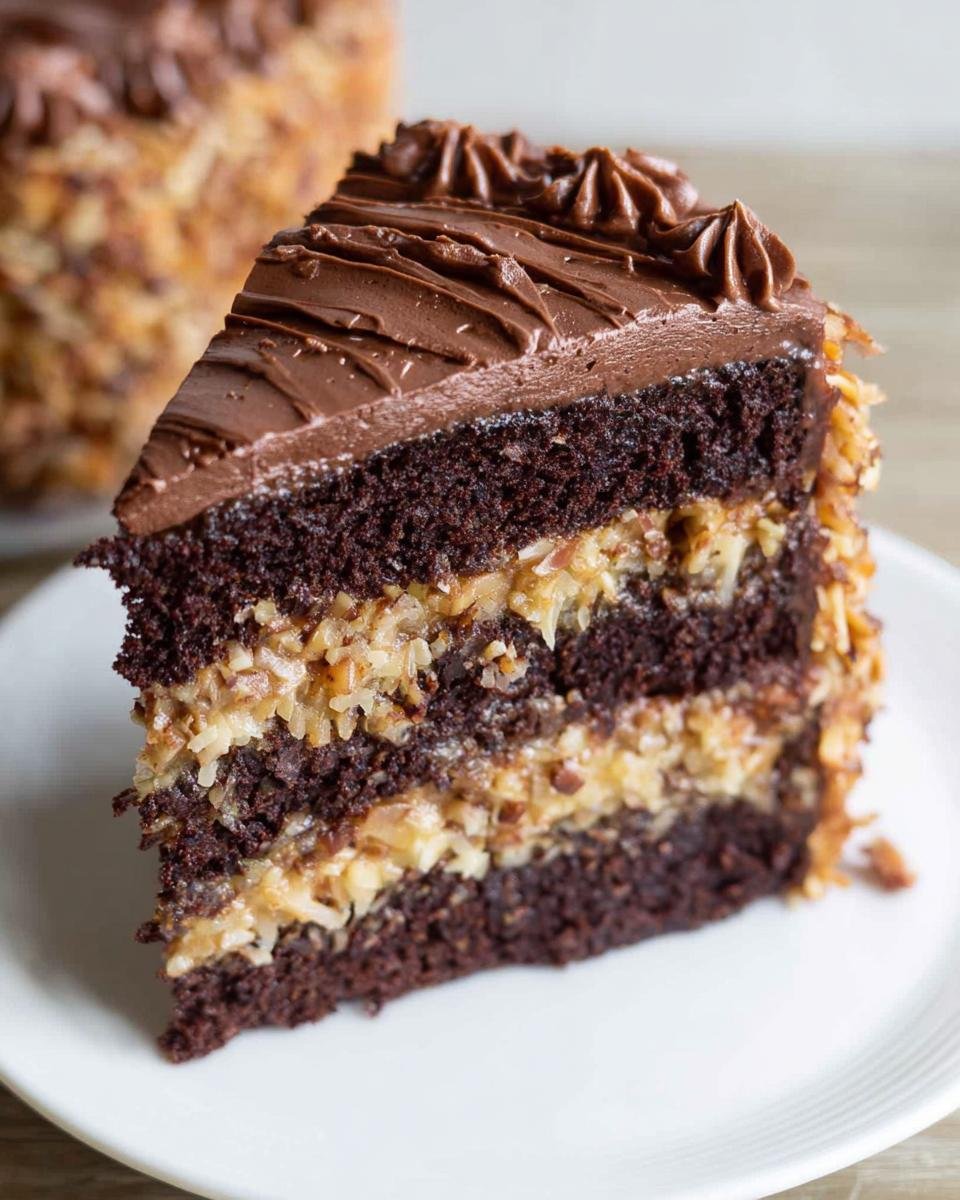
Carefully set the second cake layer on top. Now, spread the remaining chocolate buttercream all over the sides and top to seal in all those crumbs. Finally, spoon the rest of that glorious coconut pecan frosting right on top of the cake. Doesn’t that look incredible? It tastes even better, trust me!
Expert Tips for Perfect German Chocolate Cake Coconut Pecan Texture
We’ve already covered the mixing steps, but let me share a few extra secrets I picked up from years of baking—mostly by trial and (sometimes sticky) error! Getting that moist cake and perfectly set frosting is all about small details. If you master these, your cake will stand up beautifully at any classic layer cake party.
When you’re whipping this up, keep in mind that this is a very liquid batter before baking. Don’t worry, that’s intentional! But because of that, cooling methods matter a lot. If you’re looking for other recipes where temperature control is key, you should really look at how I manage my oven temperature for the best baked salmon.
Adjusting for High Altitude Baking
If you live up in the mountains, you know that baking agents act differently because of the lower air pressure. My grandmother noted in the margin of the recipe card that if you’re baking at high altitude, you need to compensate! For this recipe, go ahead and add 3 extra tablespoons of all-purpose flour to your dry mix. This helps give the cake structure so it doesn’t dome too aggressively or collapse on itself after it comes out of the oven. It’s a small change that makes a world of difference!
The Absolute Necessity of Cooling
I cannot stress this enough: the coconut pecan frosting must be totally cold before you use it. Like, room temperature cold, not warm-from-the-stove cold. If it’s even slightly warm, it will melt the chocolate buttercream it touches, and you are going to end up with a slick, runny mess instead of distinct layers.
What I usually do is make the coconut pecan frosting first, get it onto a plate, and stick it in the fridge for about 30 minutes to speed up the cooling process. Then, while it chills, I make the chocolate cake layers. By the time the cakes are done cooling on the wire racks, the filling is usually ready to go!
Handling the Thin Batter Before It Goes In
Remember that thin batter? When you’re pouring that mixture into your prepared pans, do it slowly and evenly. Because it is so liquidy, it can sometimes splash out or make a mess. Also, make sure your batter has rested for five minutes after you stir in the boiling water before pouring. This allows the cocoa to fully hydrate, which deepens that wonderful chocolate flavor we are looking for. You want that rich, dark color!
Storage and Make-Ahead Guide for German Chocolate Cake Coconut Pecan
I know this cake looks like a lot of work, and there’s nothing wrong with making parts of it ahead of time, right? That way, when party day comes, you only have to worry about the final assembly. Nonna used to make the coconut pecan frosting two days early just to ensure it was perfectly cooled and set!
If you do plan ahead, remember that the frostings have different needs. It’s super helpful to know how long each component lasts so you use everything at its peak freshness. Speaking of planning ahead for big meals, I rely heavily on planning when I make my pasta dishes; this cake is no different!
Making the Frostings Ahead of Time
The good news is that both frostings can hang out in the fridge for a bit. You want to place the coconut pecan frosting in a covered container once it has completely cooled. It’s quite stable and keeps well for about one to two weeks. That’s great for preparing for a big weekend event!
The chocolate buttercream is even hardier—it can last for two to three weeks tucked away in the fridge. Just make sure whatever container you use seals tightly. One real important practical tip here: you absolutely must remove both frostings from the cold at least one hour before you plan to use them. If they are too cold, they won’t spread nicely, and you risk tearing your beautifully baked chocolate cake layers.
Freezing the Cake Layers for Later
If you want to go really far ahead, the cake layers freeze like a dream! Once your layers are completely baked and cooled (and I mean totally cool, no sneaky warmth allowed), wrap each layer incredibly well in plastic wrap. Then, slide each wrapped layer into its own ziplock freezer bag.
You can actually keep these frozen layers for up to three months! What I love about freezing them is that once they’re rock solid, they are so much easier to frost without crumbling. My favorite trick? Frost the cakes while they are still frozen! It takes a little longer for the buttercream to smooth out, but the structure you get is amazing.
Freezing the Assembled Cake
Yes, you can freeze the whole beautiful thing, but I advise caution if you want the presentation to be perfect. If you want to freeze the assembled German Chocolate Cake Coconut Pecan, make sure it’s wrapped super securely—think about double-wrapping in plastic wrap, and maybe even a layer of foil over the top. This keeps freezer burns away from that gorgeous coconut pecan topping.
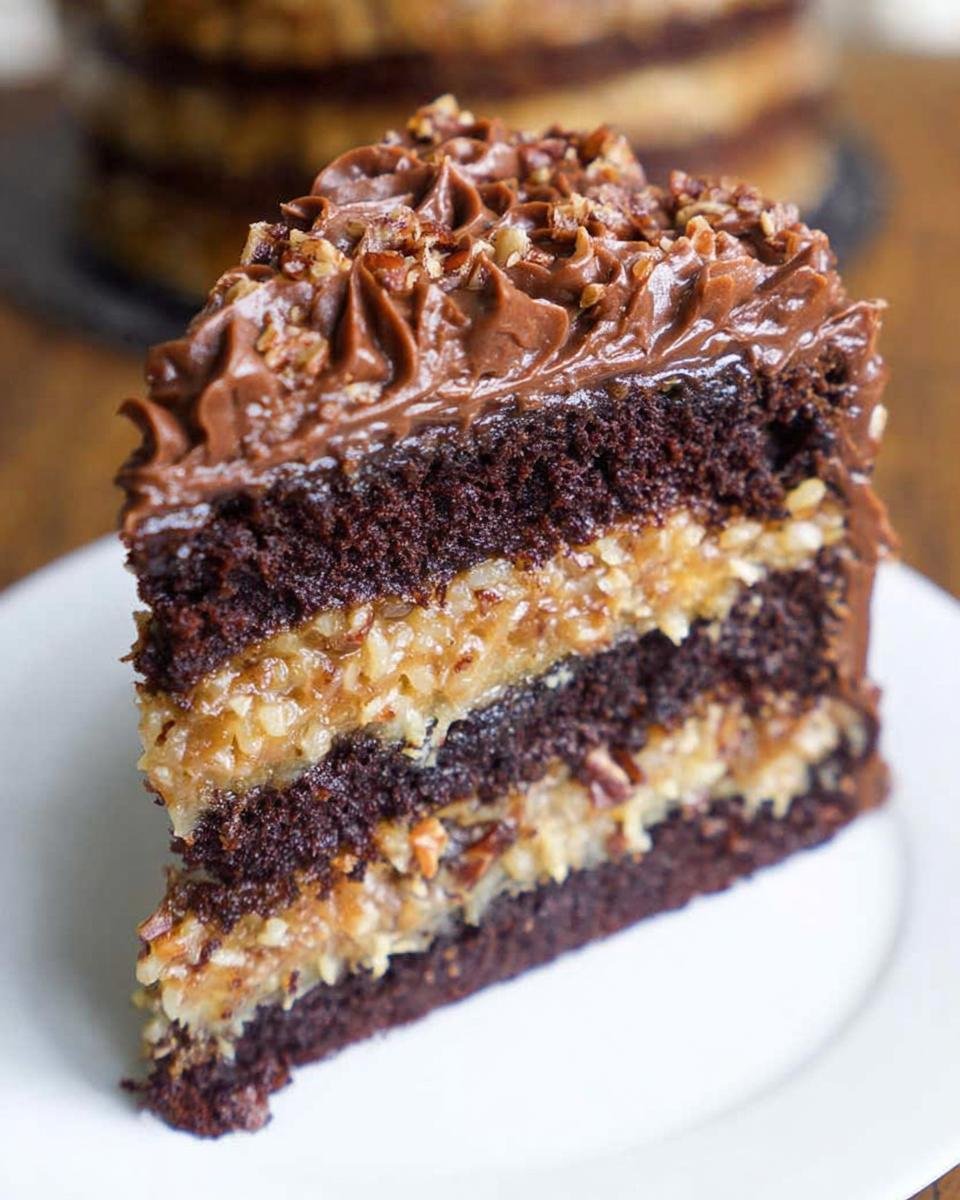
However, for the absolute best texture when serving later, I actually prefer slicing the cake first. Wrap each individual slice tightly in plastic wrap and pop those bundles into a freezer-safe container. That way, you can thaw out just what you need when the craving hits. Just remember to give those slices plenty of time to come all the way up to room temperature before anyone digs in!
Variations on the Classic Cake Recipes Easy From Scratch
While this recipe is truly the golden standard for a perfect chocolate layer cake, sometimes a baker just needs to mix things up a little bit! It’s all about putting your own spin on a reliable classic cake recipe. Since this cake is so rich and flavorful already, you don’t need big changes to make it feel special for your next gathering.
Remember, the goal here is keeping that classic flavor profile while making it fun and personalized. If you enjoy finding simple swaps in your cooking, you should take a look at my guide on easy 5-ingredient dinners; the concept of simplifying a classic applies everywhere!
Nut Swap: Pecans for Walnuts or Almonds
The coconut pecan frosting is iconic, but maybe you have a nut allergy in the family, or perhaps you just prefer the texture of something else! It’s totally fine to swap out the pecans. Walnuts are a fantastic second choice because they have a slightly earthier note that plays nicely with the chocolate and coconut.
If you want something a little lighter, try roughly chopped toasted almonds. Just toast them first! Toasting nuts brings out their oils and makes them so much crunchier and more flavorful. You only need to toast them for about 5 minutes in a dry skillet over medium heat until you can really smell them. That little step elevates the whole topping!
A Little Spice in the Chocolate Layers
The cake itself is perfectly chocolatey, but if you want to add a whisper of warmth without overwhelming the main flavors, I have a tiny suggestion. Try adding just half a teaspoon of ground cinnamon to your dry cake ingredients when you mix them in.
Cinnamon and chocolate are old friends, and that small amount won’t change the cake’s fundamental character, but it gives it a depth that people can’t quite put their finger on. It makes the whole dessert feel even more homey and perfect for a holiday or cozy party setting. Just don’t go overboard; we don’t want it tasting like Christmas yet!
Boosting the Buttercream
The chocolate buttercream is meant to be a smooth, sturdy border for that glorious coconut topping. If you want to make that buttercream a little more interesting before icing the cake, try melting the butter for it with a tiny splash of strong brewed coffee instead of using all evaporated milk. The coffee doesn’t make it taste like coffee, not really. It just deepens the chocolate notes even further, making the color richer and the flavor more decadent. It’s like a secret weapon for any chocolate lover!
Frequently Asked Questions About Your German Chocolate Cake Coconut Pecan
It happens to the best of us! Baking is fun, but sometimes things don’t turn out exactly as planned on the first try, especially with tricky frostings. I’ve gathered the questions I always get every time this cake shows up at a classic layer cake party. We’ll troubleshoot anything that pops up so your next bake is flawless! If you need a warm-up drink while you read these tips, go try my chai tea latte!
Why is my coconut pecan frosting runny?
Oh, that’s the most common bummer! This usually happens for one of two reasons, and both are fixable next time. First, you might have pulled the mixture off the heat too soon when cooking it in the saucepan. It really needs to come to that low boil and thicken up—if you stir it for just a minute or two too short, it won’t set properly once it cools. Second, and this is crucial, you didn’t let it cool down enough before spreading it! If it’s even slightly warm, it melts that lovely chocolate buttercream holding your layers together, and everything slides apart. If it sets up runny, you can sometimes put it in the fridge for 15 minutes, stir it vigorously, and try that, but patience during the cooling phase is the real trick!
Can I use this as a sheet cake instead of layer cake recipes?
Absolutely! You definitely don’t have to stick to layer cake recipes if that feels like too much fuss, though I love the height it gives. If you decide to bake this as a single sheet cake—say, in a 9×13 pan—you’ll need to adjust the time. Since the batter is thicker in one large vessel, it will take longer to bake through; probably closer to 40 or 45 minutes. You’ll still want to check it for doneness, of course.
For frosting distribution, since you don’t have distinct layers, just use that vanilla buttercream to cover the entire top. Then, use all of your wonderful coconut pecan topping to cover the top surface generously. It makes for a truly decadent, easy-to-slice dessert perfect for feeding a crowd!
Do I have to use buttermilk in the cake?
That’s a great question because buttermilk isn’t always in my fridge! You technically don’t *have* to use it, but I strongly recommend it if you can manage it. Buttermilk is acidic, and when it meets the baking soda in the recipe, it creates a beautiful, tender rise in the chocolate cake. If you don’t have any, you can easily make a substitute! Just take one cup of regular milk and stir in one tablespoon of white vinegar or lemon juice. Let it sit on the counter for about five minutes until it curdles slightly. That’s your buttermilk substitute, and it works almost as perfectly for this recipe!
Nutritional Estimate for This Classic Layer Cake
Okay, let’s talk fuel for a minute! I know when we’re making a rich, decadent dessert like this chocolate layer cake, we aren’t exactly counting points, but it’s always good to have a general idea of what’s inside, right? It helps me plan the rest of the day’s menu—maybe something light tomorrow!
Here are the approximate numbers based on standard ingredient use for one hearty slice (about 1/12th of the cake). Remember, these are just estimates! If you use extra frosting like I sometimes do, those numbers will definitely climb. If you are looking for more savory, protein-packed ideas for your main meals, definitely go check out my stuffed zucchini boats recipe!
- Calories: 591
- Fat: 31 g
- Carbohydrates: 77 g
- Protein: 5 g
- Sugar: 69 g
That sugar content is high, which is totally expected for a celebratory dessert, but look at the fat—it comes mostly from that wonderful buttery coconut pecan topping! Eat a slice, enjoy every second of it, and maybe take a long walk afterward. That’s my kind of nutrition plan!
Share Your Perfect German Chocolate Cake Coconut Pecan Experience
And there you have it! We’ve gone from dry ingredients to a towering, spectacular classic dessert. Making this German Chocolate Cake Coconut Pecan is a real treat, and frankly, the best part is hearing about how it turns out for all of you!
I want to know every detail! Did you try the make-ahead freezing trick? Did the coconut pecan frosting set up perfectly on the first go? Don’t keep the successes (or the funny kitchen mishaps!) a secret. Drop a comment below for me and let me know your thoughts on this ultimate party cake.
If you loved this recipe and feel like it deserves a spot in your regular rotation, please leave a star rating right here on the page! A great rating helps other bakers find this recipe and bring this nostalgic joy into their own kitchens. Seeing your pictures on social media would honestly make my week—tag me so I can cheer you on!
German Chocolate Cake with Coconut Pecan Frosting
Ingredients
Equipment
Method
- Heat oven to 375°F. Grease two 8 or 9-inch round baking pans. Cut a round piece of wax or parchment paper for the bottom of each pan.
- For the Cake: Stir together sugar, flour, cocoa, baking powder, baking soda, and salt in a large bowl. In a separate bowl, combine the eggs, buttermilk, oil, and vanilla and mix well. Add the wet ingredients to the dry ingredients and mix to combine. Stir in boiling water. The batter will be thin. Pour batter into prepared pans.
- Bake for 25 to 35 minutes, or until a toothpick inserted in the center comes out clean or with few crumbs. Cool 5 minutes in the pan, then invert onto wire racks to cool completely.
- For the Coconut Pecan Frosting: In a medium saucepan, add brown sugar, granulated sugar, butter, egg yolks, and evaporated milk. Stir to combine and bring the mixture to a low boil over medium heat. Stir constantly for several minutes until the mixture begins to thicken.
- Remove from heat and stir in vanilla, nuts, and coconut. Allow to cool completely before layering it on the cake.
- For the Chocolate Buttercream Frosting: Melt butter. Stir in cocoa powder. Alternately add powdered sugar and milk, beating to spreading consistency. Add a small amount of additional milk if needed to thin the frosting, or a little extra powder, until you reach your desired consistency. Stir in vanilla.
- Cake Assembly: Place one of the cake rounds on your serving stand or plate. Smooth a thin layer of chocolate frosting over the cake layer, and then spoon half of the coconut frosting on top, spreading it into a smooth layer. Leave about ½ inch between the filling and the edge of the cake.
- Stack the second cake round on top. Smooth chocolate frosting over the entire cake. Spoon the remaining coconut frosting on top of the cake.